
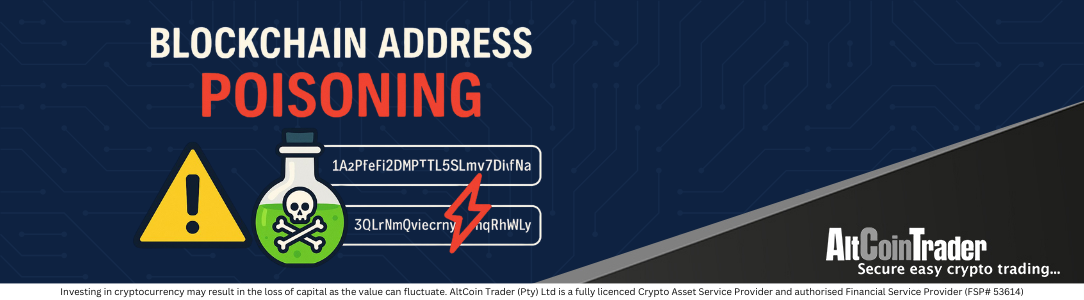
In the fast-paced world of crypto, scammers are getting smarter, and one of the latest tactics causing chaos is address poisoning. This scam has already racked up over $83 million in confirmed losses, impacting both individual users and major DeFi platforms. Let’s break it down and show you how to stay safe with AltCoinTrader.
What is Address Poisoning?
Address poisoning is a deceptive scam where hackers send small, fake transactions from wallet addresses that closely resemble your real contacts. These dummy addresses sneak into your transaction history, hoping you’ll accidentally copy them the next time you make a transfer. The result? Your crypto ends up in the scammer’s wallet.
How do these attacks work?
Attackers use a mix of clever strategies:
- Phishing: Fake websites or emails steal your keys or passwords.
- Clipboard malware: Malware alters the wallet address you're pasting.
- Fake QR codes: Looks real, but redirects your funds.
- Address spoofing: Scammers create addresses that look almost identical to real ones.
- Smart contract exploits: Vulnerabilities are used to reroute funds.
- Zero-value transfers: Appear in your wallet history without needing your approval.
Real-world losses
Here are some jaw-dropping examples of the impact of Address Poisoning:
- $2.6 million USDT stolen in May 2025: A trader fell for a zero-value transfer trick and lost millions in seconds.
- $68 million in WBTC gone in May 2024: A wallet was tricked into sending over 1,100 WBTC to a spoofed address.
- EOS blockchain hit in March 2025: After rebranding to Vaulta, scammers sent tiny amounts from addresses mimicking Binance and OKX to deceive users.
These are just a few cases showing how high the stakes are when it comes to address poisoning.
How to protect yourself
Want to outsmart the scammers? Here’s your action plan:
- Use fresh addresses for every transaction.
- Whitelist trusted addresses in your wallet — especially if you regularly transact with the same people.
- Never reuse addresses, and avoid copying from transaction history.
- Be cautious with public sharing, especially on social media. Avoid posting wallet addresses where scammers can see them.
- Use trusted exchanges like AltCoinTrader that offer strong security features and regular updates.
- Enable Two-Factor Authenticator (2FA) on your AltCoinTrader account, where more than one verification method is needed to approve transactions.
- Leverage blockchain analytics tools to detect unusual dusting activity and spoof attempts.
- Report suspicious activity immediately to AltCoinTrader.
Stay smart, trade safe with AltCoinTrader
Address poisoning is one of the cleverest crypto scams yet. Luckily, with a few simple habits and strong security tools, you can outsmart scammers and protect your digital assets. Ensure the security of your AltCoinTrader wallet by double-checking addresses before performing a transaction and enabling 2FA on your account.